
Olive mill machines / Olive washer LVT

Washing
with air
and water.

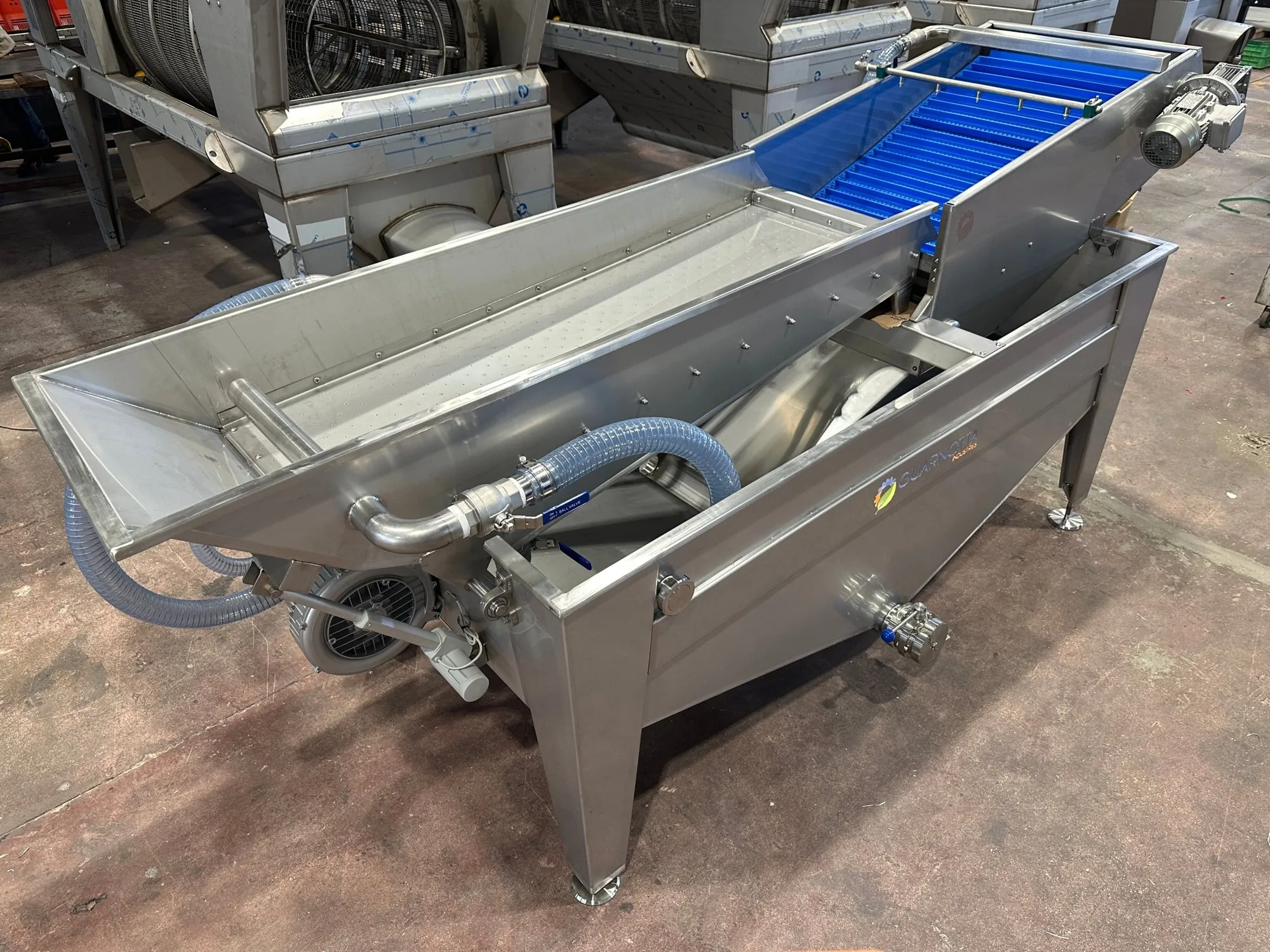
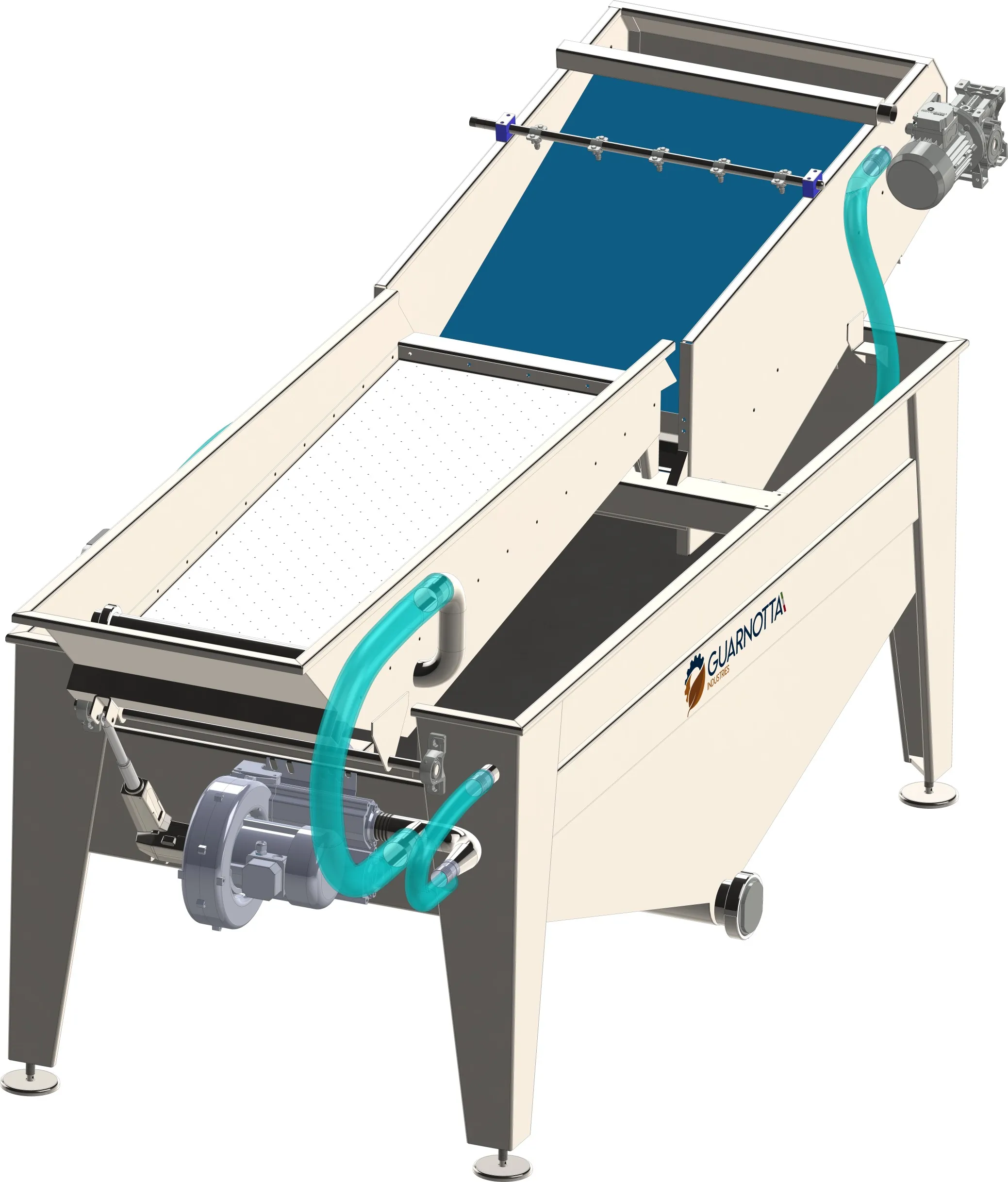
The LVT olive washer comes as LVT-50 and LVT-100, in Klassik or Special versions. The olives enter the perforated upper tank, where a fan and a pump create a bubbling flow of air and water. Stones settle at the inlet end and are discharged by tipping the tank towards the fan side with an external actuator. At the outfeed, the Special has a perforated cleated belt and a final rinse shower; the Klassik has a vibrating screen that drains off water and leaves. Both give gentle washing and have a built-in destoner.

OLIVES FROM BELT BUBBLINGAIR + WATER WASH WATER FAN EXTERNAL ACTUATOR TILTING AXIS PUMP DRAIN DIN 100 · R / L TILTING CLEAN WATER AIR KNIFEON REQUEST PERFORATED CLEATED BELT
Washingair + water
Stonestip-out discharge
DrainDIN 100, right / left
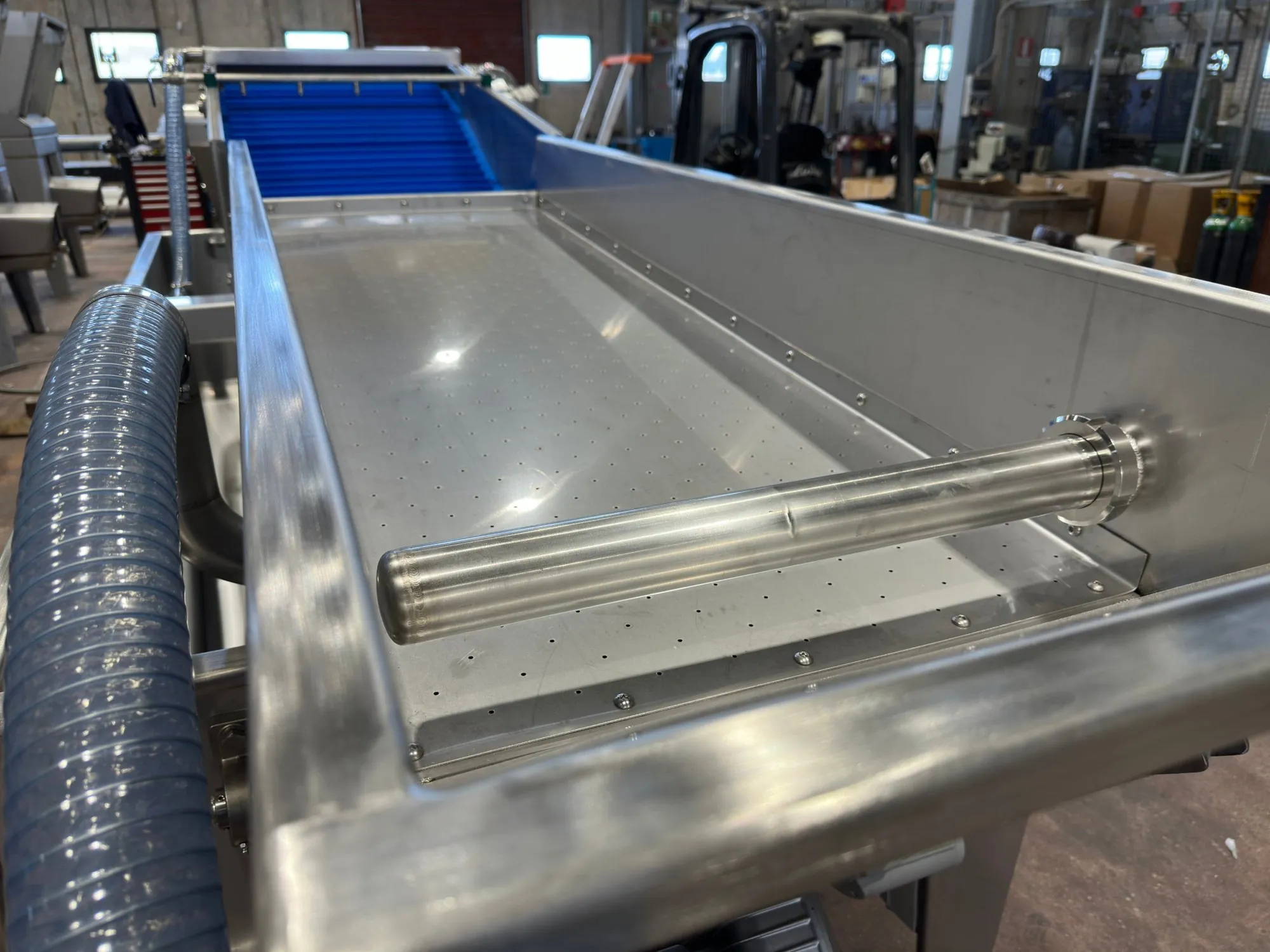
Guarnotta olive washer in the factory: perforated upper tank, lower tank, fan and perforated cleated outfeed belt in food-grade polyethylene
LVT Special ready for delivery, with its perforated cleated outfeed belt

Technical data

LVT-50 and LVT-100

Two sizes, LVT-50 and LVT-100, chosen according to the hourly throughput of your mill, each in a Klassik or Special version: dimensions and power ratings differ between versions.

FeatureLVT-50 KlassikLVT-50 SpecialLVT-100 KlassikLVT-100 Special
Capacity5 t/h (5,000 kg/h)5 t/h (5,000 kg/h)10 t/h (10,000 kg/h)10 t/h (10,000 kg/h)
Olive outfeedVibrating screenPerforated cleated beltVibrating screenPerforated cleated belt
Installed power3.12 kW3.45 kW3.92 kW3.8 kW
Dimensions (L × W × H)2,800 × 1,600 × 1,500 mm3,450 × 1,400 × 1,600 mm2,800 × 1,850 × 1,500 mm3,450 × 1,600 × 1,600 mm
MaterialAISI 304L stainless steel, 2B finish
Side drainReversible, right or left
CustomisationTo suit cultivar and type of processing

Dimensions are indicative; we reserve the right to make improvements.

Klassik or Special

Both wash with air and water and come in LVT-50 and LVT-100 sizes. What changes is the olive outfeed.

RINSE NOZZLES
Klassik

Vibrating screen

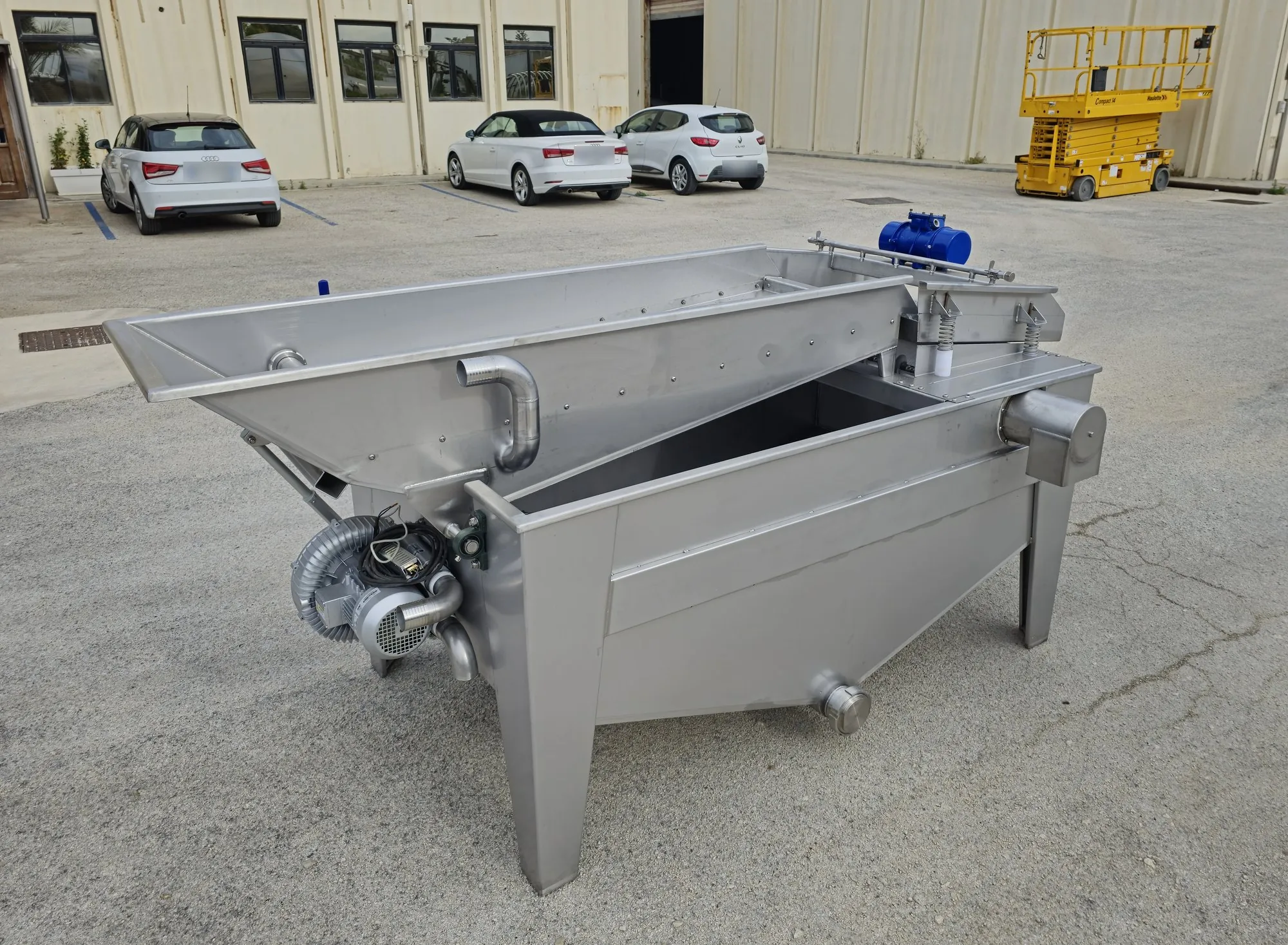
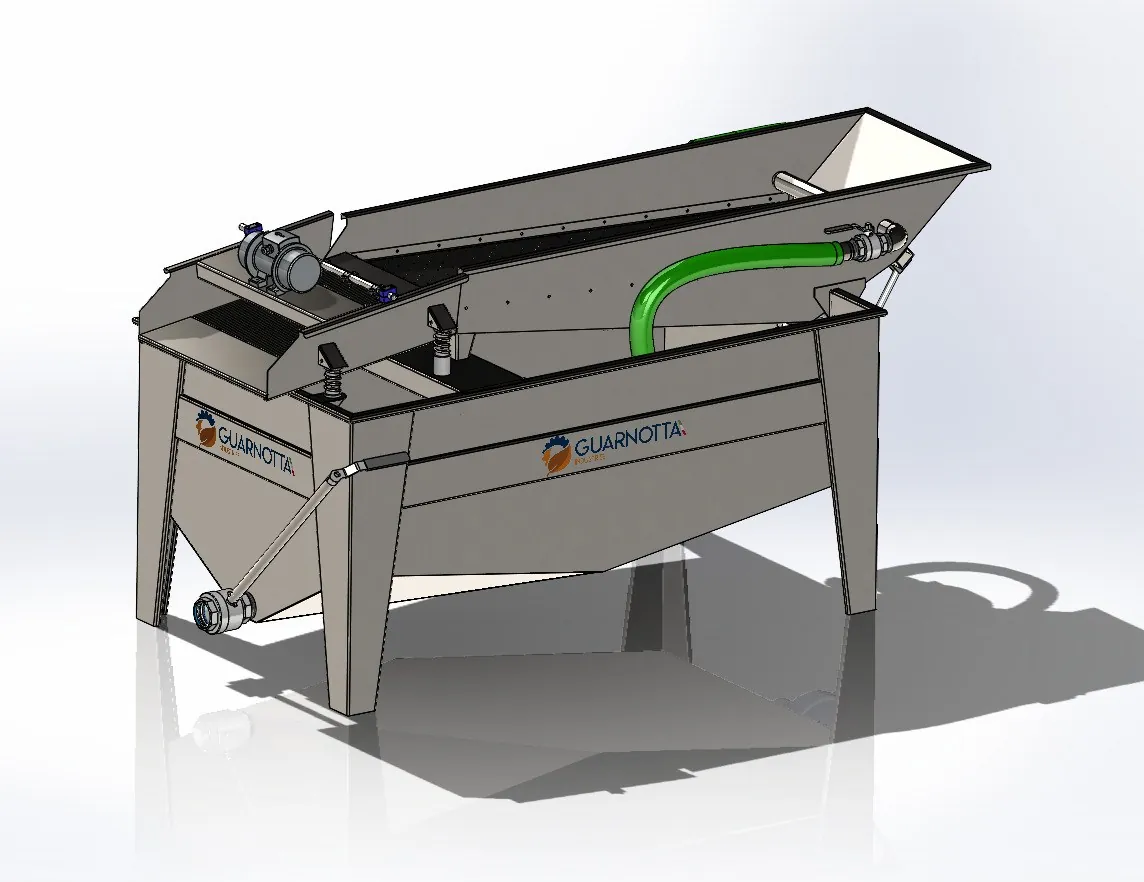
Shorter. At the outfeed the olives pass over an inclined screen, under the rinse nozzles. A vibrator motor shakes it on four springs: water and leaves drain through the screen. The leaves drop into a trough under the screen, from which an auger running across the short side carries them out of the washer.
CLEAN WATER
Special

Perforated belt

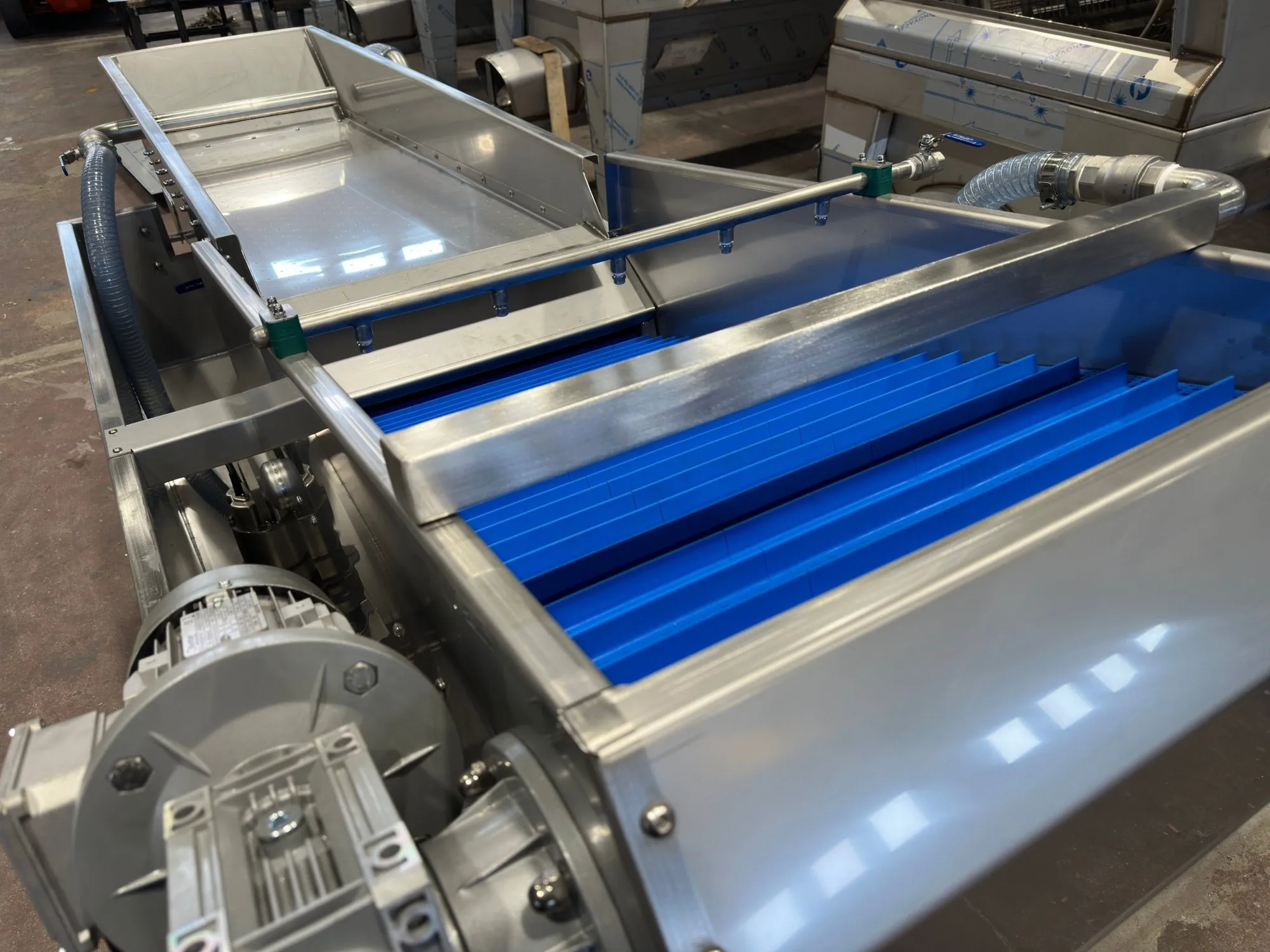
Longer upper tank. The olives leave on a perforated cleated belt in food-grade polyethylene, which lets them drain and carries them away; a final rinse shower washes them with clean water. On request, an air knife dries them before extraction.

Klassik · as standard

Blower for bubbling the water, vibrating screen for draining, final rinse shower, perforated auger to discharge leaves and residues, linear actuator that tips the perforated tank to discharge stones, full drain valve, overflow, on-board wiring.

Optional: control panel.

Special · as standard

Blower for bubbling the water, perforated cleated belt in food-grade polyethylene to drain and convey the olives, final rinse shower, DIN 100 full drain valve, DIN 50 overflow, submersible solids-handling pump, linear actuator that tips the perforated tank to discharge stones, adjustable feet.

Optional: mud auger, air knife to dry the olives, control panel.

3D model of the LVT Special washer with perforated outfeed belt and rinse shower
LVT Special · 3D model
Perforated cleated belt in food-grade polyethylene and rinse shower bar of the LVT Special
LVT Special · perforated cleated belt and rinse shower
Perforated tank of the LVT Special where air and water wash the olives
LVT Special · perforated tank: air and water, gentle washing
Stainless steel LVT Klassik olive washer in the yard of the Guarnotta factory
LVT Klassik · leaving the factory
3D model of the LVT Klassik washer with vibrating screen and discharge auger
LVT Klassik · 3D model

Soil, stones, cultivar: we set it up for your olives

Ground-picked or tree-picked olives, different cultivars, seasons with more or less soil and stones: we adapt the machine to how your olives arrive.

  • Throughput5 or 10 t/h
  • Olivescultivar and harvesting method
  • Spacefootprint and connections in your mill
  • Matchingleaf remover and conveyors sized for the washer
  • Drainreversible, right or left, with DIN 100 butterfly valve

Complete receiving line

Alongside the washer

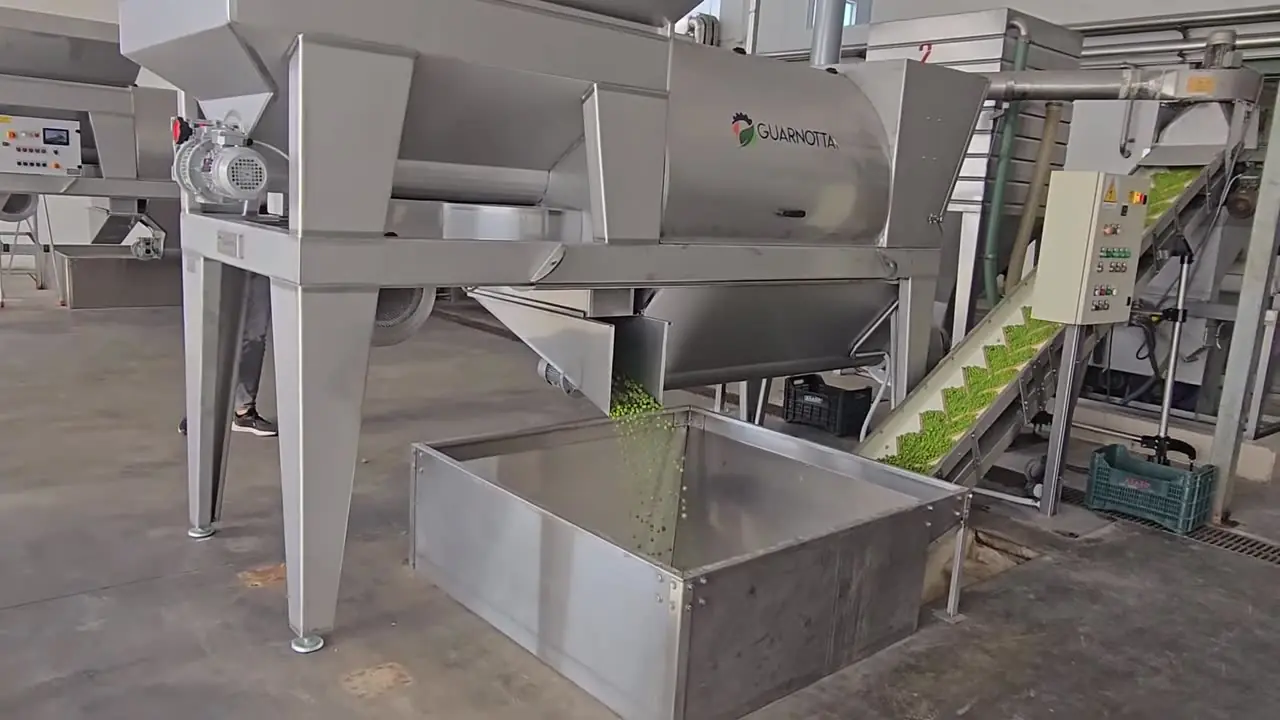
Guarnotta leaf remover in operation: the clean olives drop into the hopper and the conveyor carries them to the washer

Leaf and twig remover DRF

DRF-50 and DRF-100: they separate leaves, twigs and the larger stones before washing, sized for the throughput of the washer.

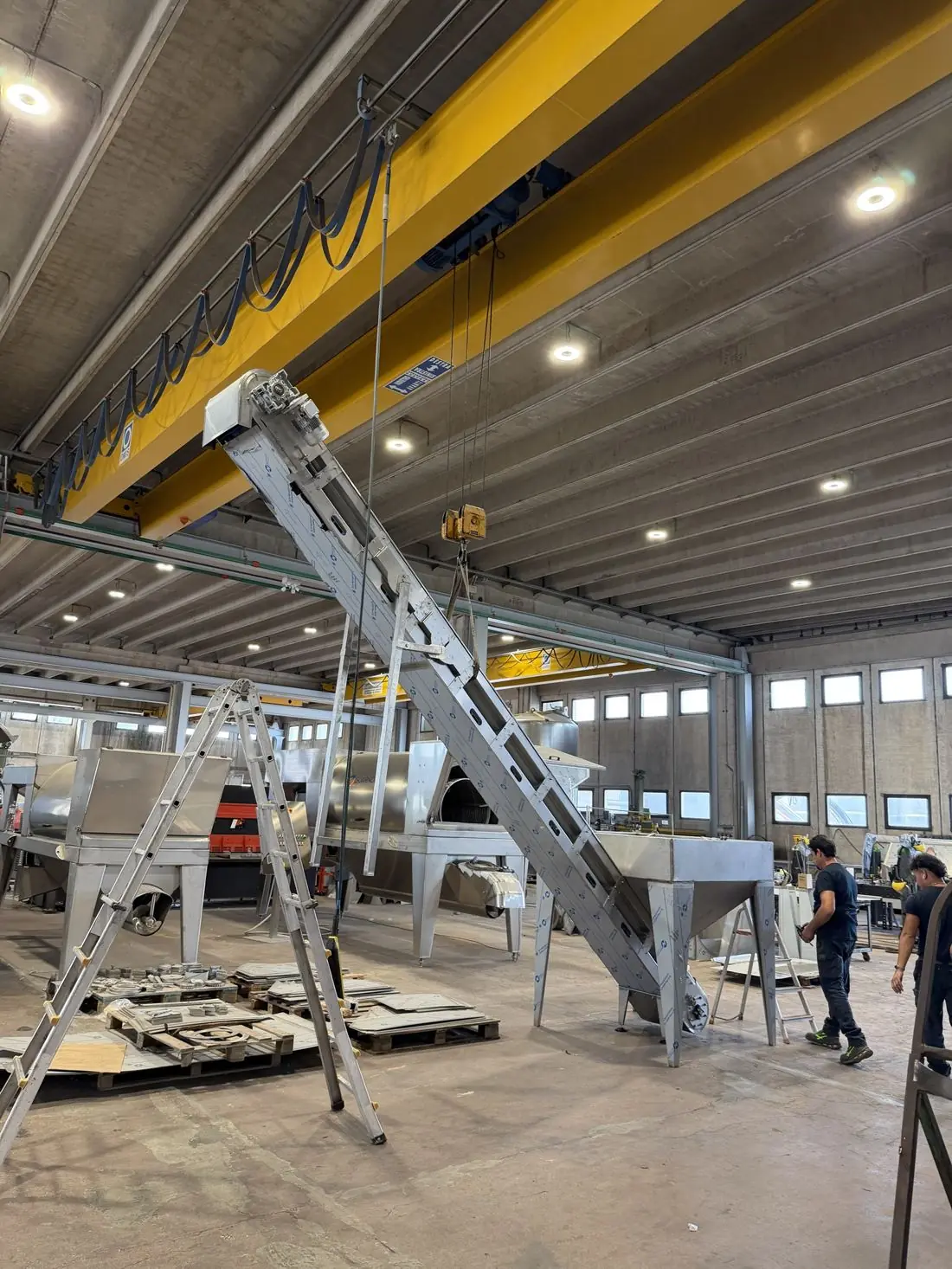
Stainless steel conveyor belt being assembled in the factory

Conveyor belts

They carry the olives between hopper, leaf remover and washer, built to suit the mill layout.

Frequently asked questions

Olive washer

Which model should I choose, LVT-50 or LVT-100?

The LVT-50 for up to 5 t/h of olives, the LVT-100 for up to 10 t/h. If your mill is close to the limit or the olives arrive with a lot of soil, we recommend the larger model.

What is the difference between the Special and the Klassik?

The olive outfeed. The Klassik is shorter and the olives leave over an inclined vibrating screen with rinse nozzles: water and leaves drain through the screen and an auger running across the short side carries the leaves out. The Special has a longer tank and the olives leave on a perforated cleated belt in food-grade polyethylene, with a final rinse shower; the air knife is available on request.

Can it be fitted into an existing olive mill?

Yes. It is a stand-alone machine and connects to the line you already have. We check the footprint and connections with you.

Which washer is right for you?

The right model also depends on how much soil and how many stones arrive with your olives.