

Additional hopper
An additional hopper above the feed hopper raises the receiving capacity to 4 bins. The bins are tipped straight into the leaf remover: no ground-level hopper or loading conveyor is needed.
Our DRF leaf and twig remover comes in two models, DRF-50 and DRF-100. A hopper with an auger feeds the olives into the baskets, above the fan. The air pushes them forward through the first basket, and a spiral brings them back through the second to the discharge below the inlet. Leaves and twigs drop into an auger that carries them out of the machine.
Installed in olive mills
Photos and videos from our customers’ mills. Our project for Oleifici Asaro dal 1916 →
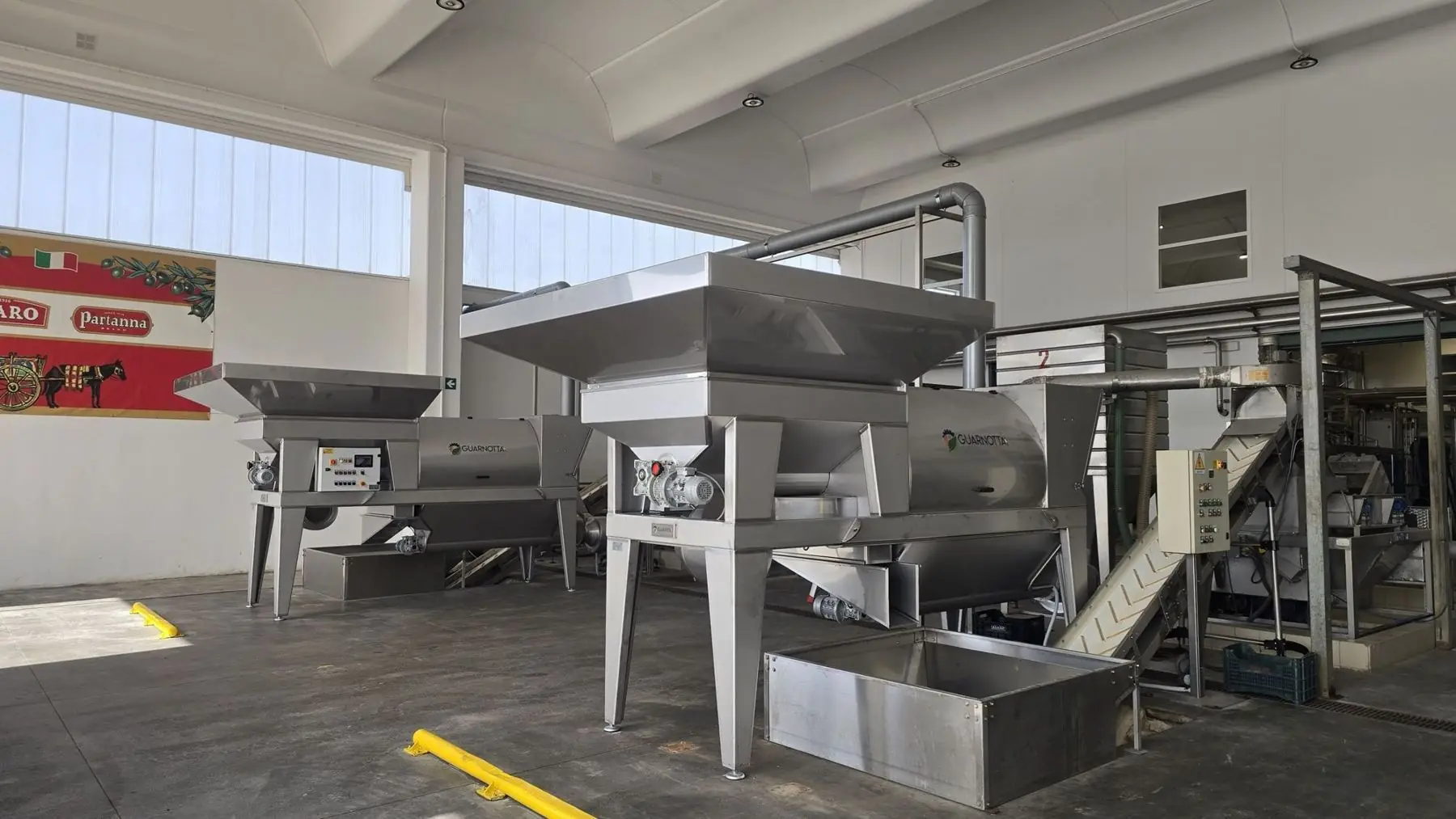
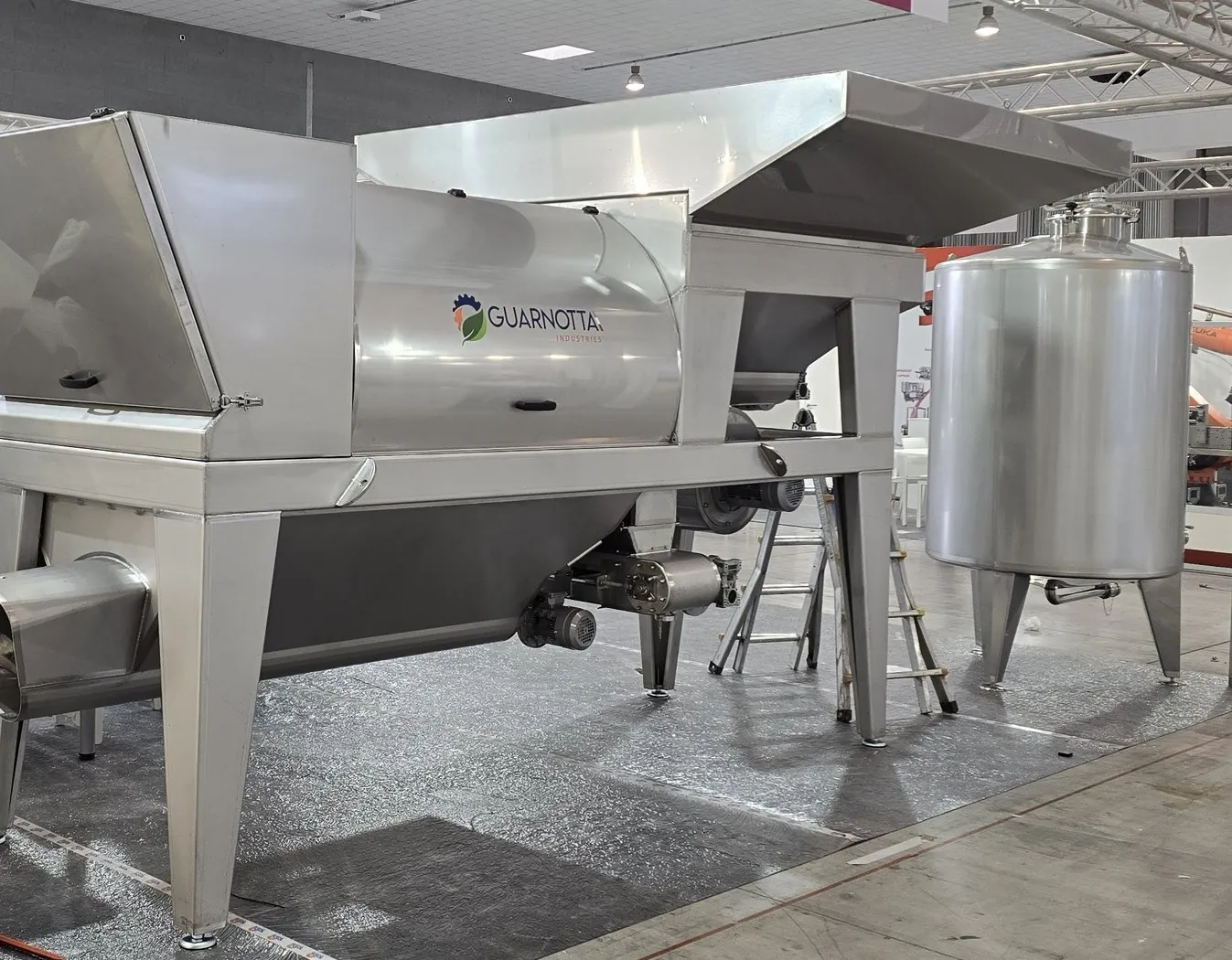
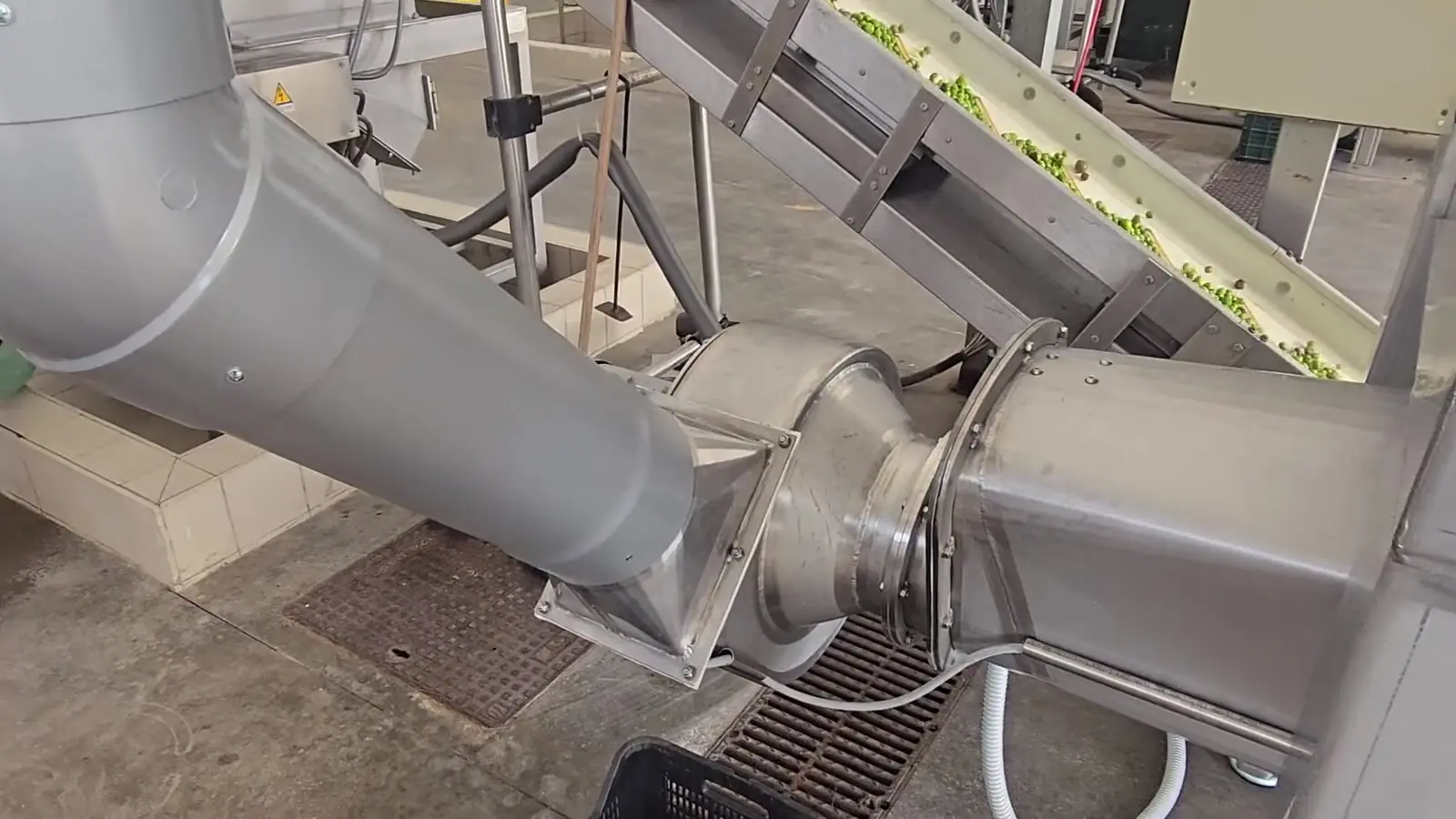
Dimensions are indicative: we reserve the right to make improvements.
| Feature | DRF-50 | DRF-100 |
|---|---|---|
| Capacity | 5 t/h (5,000 kg/h) | 10 t/h (10,000 kg/h) |
| Overall dimensions L × W × H | 4,030 × 1,310 × 2,250 mm | 4,750 × 1,550 × 2,500 mm |
| Installed power | 4.45 kW | 6.7 kW |
| Matching washer | LVT-50 olive washer | LVT-100 olive washer |
| Material | AISI 304L stainless steel | |
| Drive | Pinion and gear-wheel drive in heavy-gauge stainless steel: minimal maintenance | |
| Baskets | Inverter (VFD) on the gearmotor as standard, with soft start | |
| Feed auger | Mechanical speed variator as standard; inverter on request | |
| Compressed air | Not required | |
| Access doors | Gas springs, like a car bonnet: they open and stay in position | |
| Standard equipment | 4 anti-vibration mounts, electrical control panel, on-board wiring | |
| Video-detect | Optional: camera over the hopper with a screen on the control panel, to see the fill level in real time | |
| Stones | Over 30 mm rejected with the leaves and twigs; 5 to 30 mm separated in the washer | |
Options
Five options, all of which can be retrofitted once the machine is installed.
An additional hopper above the feed hopper raises the receiving capacity to 4 bins. The bins are tipped straight into the leaf remover: no ground-level hopper or loading conveyor is needed.
A blower with a stone trap drawer sends leaves and twigs away from the machine through a duct. Stones over 30 mm, rejected by the machine along with the leaves and twigs, are caught in the drawer.
It connects to the olive discharge in place of the chute and runs horizontally under the machine, along the short side. Once past the frame it rises at an incline to the washer: a more compact plant and a clear floor.
A camera films the hopper and shows it on a screen on the control panel: the operator sees in real time how full it is, without climbing up to check.
In place of the standard mechanical speed variator: the auger speed, and therefore the infeed rate, is set precisely from the control panel, even during processing.
As standard: inverter on the baskets with soft start, mechanical speed variator on the feed auger, electrical control panel, on-board wiring and four anti-vibration mounts.
Leaf remover, conveyors and washer share the same throughput, 5 or 10 t/h.
How we size it
Frequently asked questions
No. It also works with washers from other manufacturers: we choose the DRF-50 or DRF-100 based on their throughput. With our washers the throughputs are already matched, 5 or 10 t/h.
Yes. The olives keep rolling over one another in the airflow, and the machine carries out a first dry clean: it removes surface dust and lightens the load on the washer. Caked-on mud needs water, and the washer removes it.
Very little: regular cleaning and greasing of the gear wheel and the basket guides. The pinion and gear-wheel drive in heavy-gauge stainless steel only needs periodic greasing. The baskets can be replaced without any cutting or welding.
Yes, through qualified technicians in the countries where we work. Tell us where your mill is and we will put you in touch with the nearest one.
Tell us how many tonnes an hour you process and how your olives are harvested, and we will recommend the right model.